
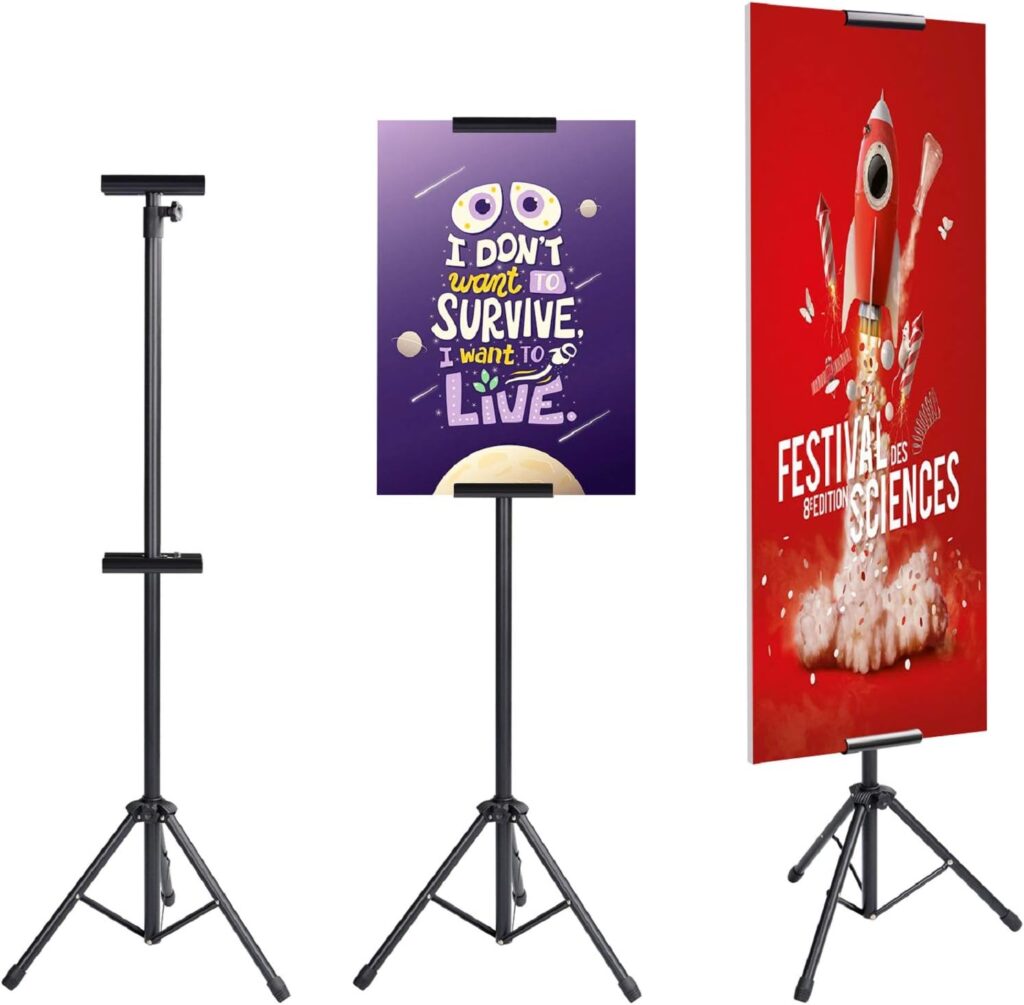
Banner stands look deceptively simple: a printed graphic, a support, and you’re done. In practice, size and format choices affect everything from how legible your message is at a distance to whether your display survives repeated setups without curling at the edges or wobbling under bright venue lighting.
If you’re buying (or specifying) banner stands for events, retail, hospitality, or office environments, it helps to think like an installer and a designer at the same time. Where will it sit? How far away will people be when they first see it? How will it be transported? Let’s break down the most common sizes and formats, and how to choose with confidence.
Start with the viewing distance (not the venue)
A banner stand’s job is usually to earn a “first look” in a busy environment. Most people will give you only a few seconds before they decide whether to approach, so your size choice should be guided by legibility, not just what fits in the car.
As a practical rule of thumb, think in layers:
- Long-range cue (5–10 metres): brand, headline, striking image
- Mid-range detail (2–5 metres): supporting benefit, credibility marker (award, rating, client logo)
- Close-range action (under 2 metres): QR code, offer terms, web address, conversation starter
A stand that’s too narrow forces you to cram in copy to “make it work,” which usually reduces impact. Conversely, going oversized in a tight space can feel visually loud and make your message harder to scan.
Common banner stand sizes (and what they’re for)
Roll-up/pull-up banners: the default for a reason
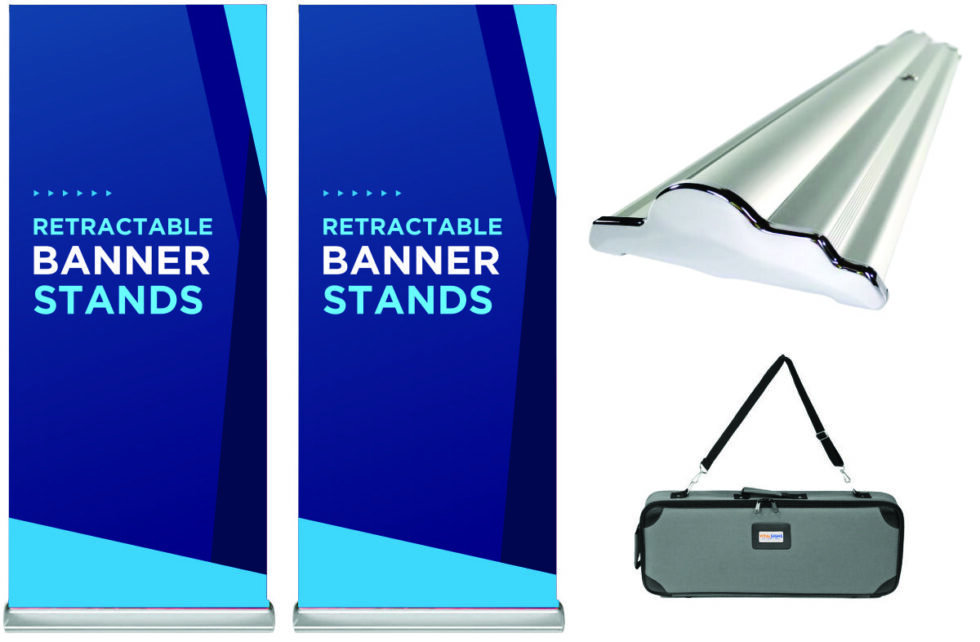
The most widely used retractable banner size in the UK is around 850mm wide by 2000mm high. It’s popular because it hits the sweet spot: tall enough to stand above a table, wide enough for a headline and simple layout, and compact when packed.
Other frequent widths include 1000mm and 1200mm. As you go wider, you gain breathing room for your design—useful for photo-led layouts or when you need two columns of information—but you also increase visual weight and transport footprint.
When to choose which:
- ~850mm: quick setups, general-purpose events, tighter floorplans
- ~1000–1200mm: premium positioning, photography, slightly busier messaging (but still concise)
Wide-format and backwall-style banners
If you’re working with a shell scheme or a booth space, you may want a “hero” graphic that behaves more like a backdrop than a sign. These often start at 1500mm–2000mm wide and can go larger.
The biggest advantage isn’t just size—it’s authority. A wide display establishes territory, anchors your stand for photos, and makes your brand visible from across an aisle.
This is also the point where it becomes useful to compare banner stands as part of a broader set of marketing tools to boost visibility, because the right choice often depends on what else you’re placing around it: counters, literature holders, demo tables, or directional signage.
Desktop and mini banners
Not every banner needs to be floor-standing. A3 and A4 desktop banners work well at reception desks, point-of-sale counters, and check-in tables—places where the viewer is already close and you’re reinforcing a decision rather than trying to attract attention from afar.
Use these for:
- promotions at till points
- service menus (gyms, salons, clinics)
- QR-led actions (sign-ups, downloads)
Formats: what changes when you change the hardware?
Retractable roll-up: fastest setup, most forgiving
Retractable stands are popular because they:
- set up in under a minute,
- protect the graphic during transport,
- look clean with minimal assembly.
The trade-off is durability varies by cassette quality and how often you’ll use it. If you’re touring events, a sturdier base and better pole fittings matter more than you might expect.
X-banners and L-banners: lightweight, budget-friendly, less “premium”
X-banners use a tensioned frame behind the graphic. They’re light and inexpensive, but they can look less polished, and the corners may show stress over time. L-banners are similar in spirit—simple support, quick to deploy—but typically don’t have the same crisp, self-contained finish of a retractable.
These formats make sense for:
- short-term campaigns,
- internal events,
- situations where weight and price matter more than longevity.
Fabric tension and “soft signage”: the modern, photo-ready look
Fabric systems have surged in popularity because they photograph well (fewer reflections), pack down neatly, and can look more like retail-grade branding than “event signage.”
If your banner will appear in photos or behind speakers on camera, fabric is worth considering. Just be mindful of lighting: very dark backgrounds can show creases if the fabric isn’t properly tensioned.
Double-sided banners: when footfall comes from both directions
In corridors, mall environments, or aisles where people approach from either side, double-sided stands can outperform single-sided graphics simply because you’re never showing a blank back.
Design tip: don’t mirror the same message on both sides by default. Consider tailoring each side to the direction of travel (e.g., “Register here” on one side, “Talk to an expert” on the other).
Design and print specs that prevent expensive mistakes
Orientation, bleed, and safe areas
Banner stands are tall, so vertical layouts are the norm. Leave a safe margin so key text doesn’t sit too close to edges, and remember that some retractable systems hide a small portion of the graphic at the bottom inside the cassette.
Also: check whether your stand needs extra bleed or has specific template requirements. A design that looks perfect on screen can end up with a headline uncomfortably close to the top once it’s physically extended.
Resolution and readability
Large banners don’t always need “photo-perfect” resolution, but they do need clarity where it counts:
- Keep headlines bold and high-contrast.
- Avoid long sentences; banners aren’t brochures.
- Treat QR codes carefully: give them quiet space and test scan from realistic distances.
Finish and lighting considerations
Gloss can look vibrant, but it may reflect harsh venue lighting. If you know your banner will sit under spotlights or be photographed frequently, a matte finish (or fabric) often produces a more consistent result.
A simple way to choose the right size and format
Before you decide, answer three questions:
- Is this banner attracting attention or supporting a conversation?
Attraction typically wants taller/wider formats; support can be smaller and more detailed. - How often will it travel and who sets it up?
Frequent travel favours retractable or fabric systems with protective cases and quick assembly. - What’s the environment—indoors, outdoors, or “drafty indoors”?
If there’s airflow (open doors, atriums), stability matters: heavier bases and better pole systems reduce wobble.
Banner stands are one of those rare marketing assets where practical engineering and messaging discipline meet. Get the size right, choose a format that suits how you’ll actually use it, and your design suddenly has room to do its job—clearly, confidently, and without fighting the hardware.